

Coffee Roast Levels: Light vs Medium vs Dark Explained
A visual guide to coffee roast levels. Learn roast chemistry, bean crack kinetics, caffeine retention facts, and how to choose the right roast for your morning cup.
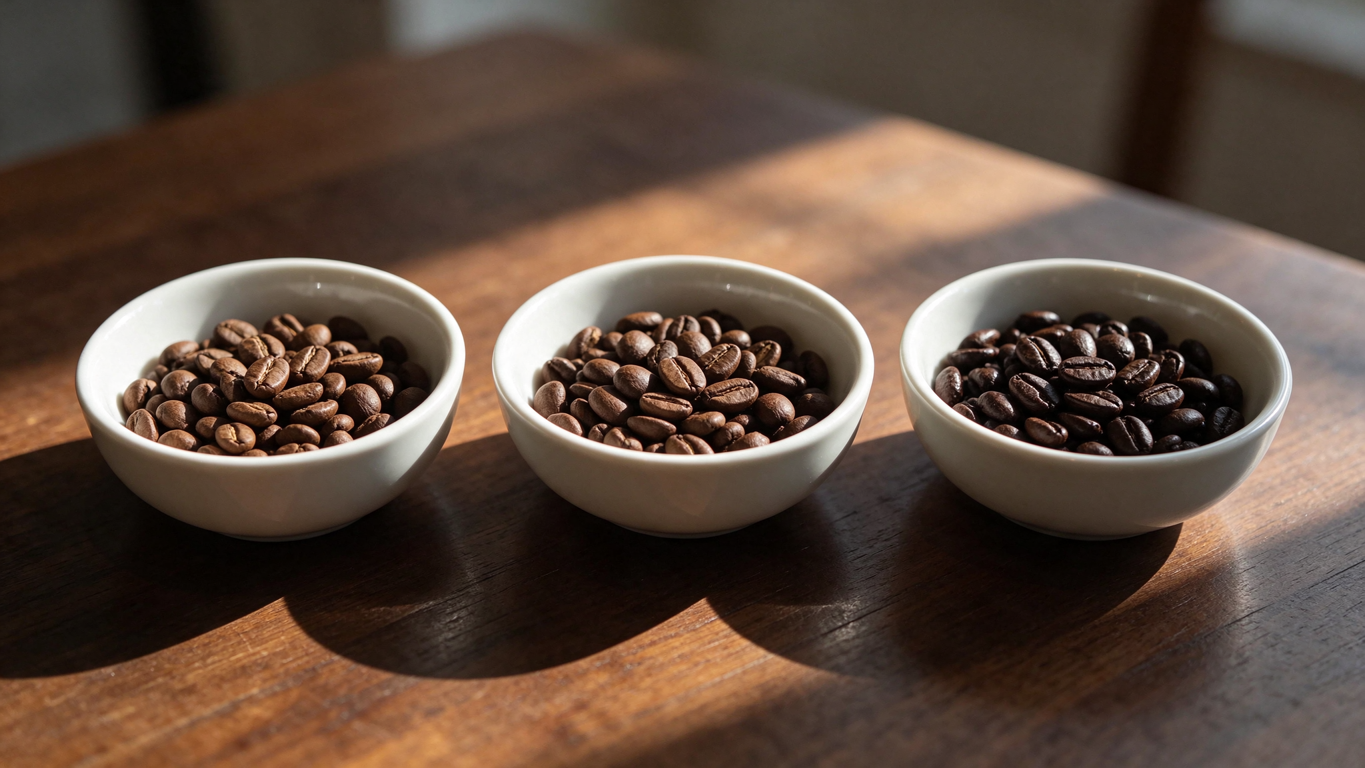
Educational Guide: An independent masterclass by Mountains Coffees covering roast chemistry, flavor migration, caffeine retention, and brewing adjustments.
Roast Chemistry Masterclass
Coffee Roast Levels: Light, Medium & Dark: Light, Medium & Dark Explained
How heat, time, and bean crack kinetics transform a raw green coffee seed into the complex aromatic beverage in your cup.
The Coffee Roasting Spectrum
Coffee roasting is an art of thermodynamics and chemical transformation. Inside the roasting drum, green coffee beans absorb heat, lose moisture, expand, and undergo the Maillard reaction—the same complex browning reaction that gives seared steak and crusty bread their rich flavors.
Light Roast
Internal Temp: ~385°F–400°F (196°C–205°C)
Roasted to the first crack. The bean remains light cinnamon-brown and dry. Delivers high origin-acidity, bright citrus notes, and delicate floral aromas (e.g., Green Mountain Breakfast Blend).
Medium Roast
Internal Temp: ~410°F–428°F (210°C–220°C)
Roasted between the first and second crack. Balanced acidity with deepening caramelization, nutty warmth, and chocolate undertones (e.g., Colombia Select).
Dark Roast
Internal Temp: ~440°F–465°F (225°C–240°C)
Roasted through the second crack. Surface oils emerge, bean sugars become deeply caramelized, creating smoky, cocoa, and molasses notes with minimal acidity (e.g., Dark Magic, French Roast).
The Caffeine Myth: Dark vs Light Roast
A widespread myth suggests dark roast coffee has more caffeine because it tastes stronger. In reality, the opposite is slightly true by volume. Caffeine is chemically stable during the roasting process. Because light roast beans are denser and smaller, a scoop of light roast beans contains slightly more beans—and therefore slightly more caffeine—than a scoop of expanded, lightweight dark roast beans.
How to Choose Based on Your Taste
- If you drink coffee black: Start with a high-quality light or medium roast to appreciate origin fruit and citrus notes without smoky bitterness.
- If you add milk or sweetener: Dark roasts like Dark Magic are superior, providing enough body to prevent a diluted, watery cup.
- If you have a sensitive stomach: Dark roasts often stimulate less stomach acid secretion due to higher levels of N-methylpyridinium (NMP) produced during extended roasting.
Roast Profiles in Practice: Tested Reviews
- Green Mountain Breakfast Blend Review (Light Roast) – See light roast first-crack characteristics in a real-world morning cup.
- Green Mountain Dark Magic Review (Dark Roast) – Examine how second-crack roasting produces dense chocolatey body.
- Dark Magic vs French Roast Showdown – A direct comparison of two different dark roast thermodynamic profiles.
- How to Choose Coffee for Your Machine – Matching your preferred roast level to your brewing machine.
Editorial Research & Methodology
This analysis was compiled by the Mountains Coffees Editorial Team through manufacturer specification verification, Arabica bean origin data, customer feedback patterns, and roasting thermodynamics. Mountains Coffees does not operate a commercial tasting laboratory; recommendations reflect researched market data and objective sensory criteria.
Verified Sources & Citations:
• Green Mountain Coffee Roasters / Keurig Dr Pepper Official Product Specifications
• Specialty Coffee Association (SCA) Roast Degree & Cupping Classification Standards
• National Coffee Association (NCA) USA Coffee Brewing Guidelines